
Your First jiu jitsu class - what to expect
Trying Brazilian jiu-jitsu for the first time can be intimidating.
You may be wondering whether you need to get in shape first, what you are supposed to wear, or whether someone is going to throw you directly into a round with an experienced grappler.
The answer is no.
At Infinity Grappling, our goal is to make your first class as straightforward and comfortable as possible. You do not need previous martial arts experience, and you are not expected to understand everything the first time you step onto the mat.
You just need to be willing to learn.
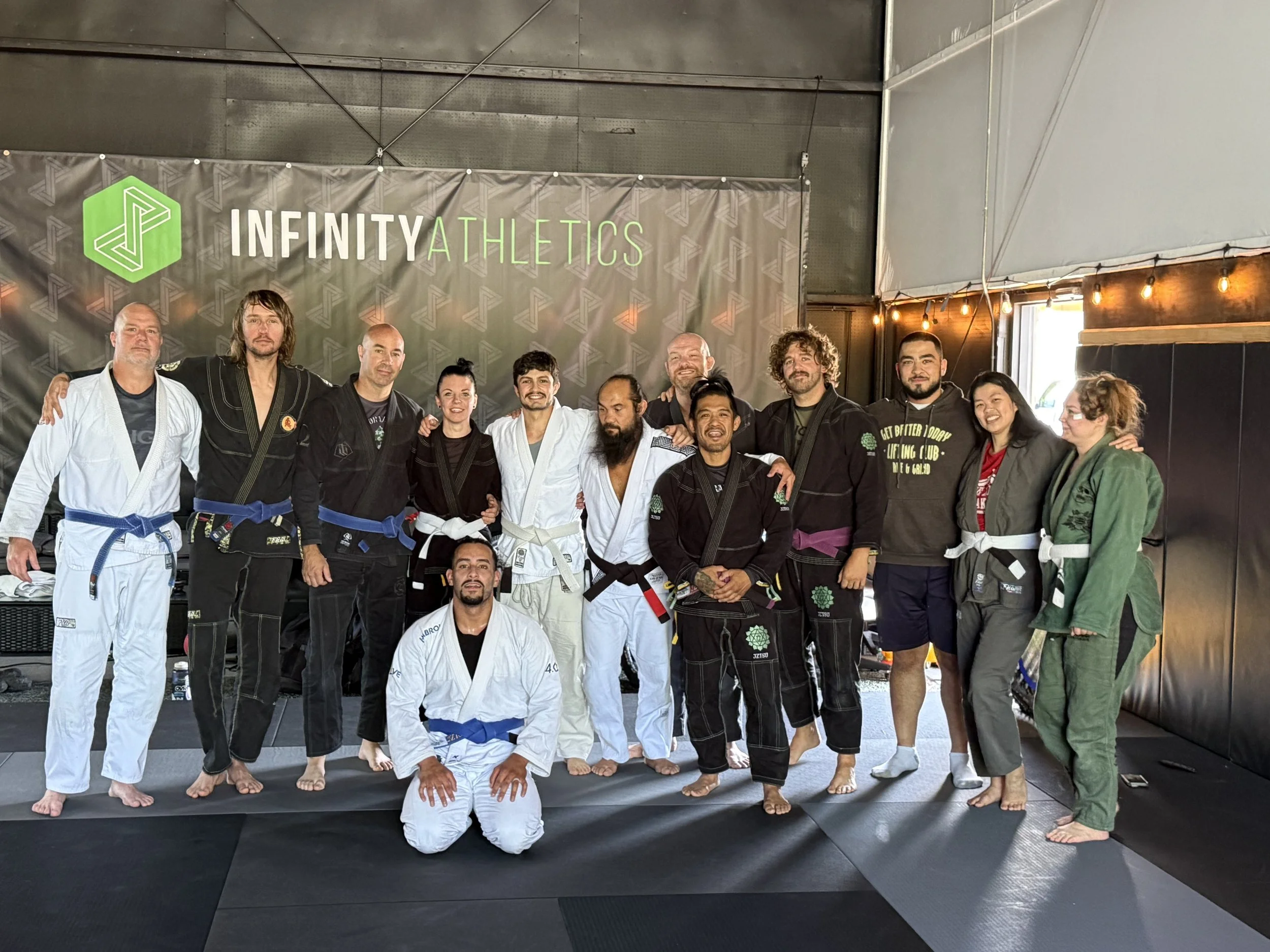
All smiles after an intense and fun noon Gi jiu jitsu class led by black belt instructors Joshua Lange and Cody Daniels
You Don’t Need to Get in Shape First
This is a common one we hear. A lot of people tell themselves they will try jiu-jitsu after they lose some weight or improve their conditioning.
That is a little like saying you need to get stronger before you start lifting weights.
Jiu-jitsu itself will help improve your conditioning, coordination, mobility, and strength. The important part is starting at an appropriate pace.
Your coach will help you understand the movements, adjust the training when necessary, and gradually introduce you to the physical demands of the sport. You are not expected to keep up with someone who has been training for years.
Start where you are. We will help you build from there.
What Should You Wear?
For a no-gi class, wear comfortable, close-fitting athletic clothing.
A T-shirt or rash guard with athletic shorts or leggings works well. Avoid clothing with zippers, pockets, metal pieces, or anything that could catch on another person while training.
For a gi class, you will eventually need a properly fitted Brazilian jiu-jitsu gi. Contact us before your first class if you are unsure what to purchase or what you should wear for your trial.
You should also bring:
Water
Sandals or slides
Clean training clothes
A willingness to be a beginner
Shoes are never worn on the mats. Sandals make it easier to keep your feet clean when walking anywhere off the training area.
What Happens When You Arrive?
Try to arrive approximately 10 to 15 minutes before class.
This gives you time to find the training area, meet your coach, ask questions, and get settled without feeling rushed.
Let the coach know that it is your first class. We will explain the layout of the facility, where to leave your belongings, and anything you need to know before stepping onto the mat.
You will not be expected to figure everything out on your own.
What Does a Jiu-Jitsu Class Look Like?
Most classes begin with movement preparation or a short warm-up. From there, the coach will introduce a technique or position and explain it step by step.
You will usually practice the technique with a partner before moving into more controlled positional work or live training.
Do not worry if the movements feel unfamiliar. They are supposed to.
Jiu-jitsu involves learning how to move your body while also responding to another person. That takes time. Nobody walks into their first class already knowing how to shrimp, frame, pass guard, or escape from the bottom.
Your job during the first few classes is not to be good. It is to pay attention, ask questions, and begin becoming familiar with the positions.
Will I Have to Spar?
Live training, often called rolling, is an important part of Brazilian jiu-jitsu. It is also something that should be introduced responsibly.
Your coach will explain which portions of the class are appropriate for you and pair you with someone who can help you learn safely.
Nobody should expect a new student to understand every position, rule, or submission immediately. The goal is not to see how tough you are. The goal is to help you learn enough that you can continue showing up and improving.
One of the first things you will learn is how to tap. Tapping simply tells your partner to stop. There is no shame in it, and experienced students tap regularly.
What If I’m Nervous About Training With Other People?
That is normal.
Jiu-jitsu puts you in closer contact with other people than most forms of exercise. It can feel awkward at first, especially if you have never participated in wrestling, grappling, or another contact sport.
That feeling usually fades quickly.
A good training environment is built around communication, mutual respect, and taking care of your training partners. Everyone in the room was new once, and most experienced students remember exactly what their first class felt like.
Cleanliness Matters
Jiu-jitsu is a close-contact sport, which makes hygiene important.
Arrive in clean clothing, keep your fingernails and toenails trimmed, and cover any cuts or scrapes before training. Avoid stepping onto the mats with shoes, and do not walk into bathrooms barefoot.
After class, wash your training clothes and shower as soon as reasonably possible.
A clean facility and responsible training habits protect everyone in the room and allow the team to keep training consistently.
Gi or No-Gi: Which One Should You Try?
Both styles teach the core positions, controls, escapes, and submissions of Brazilian jiu-jitsu.
Gi training uses the traditional uniform. The fabric can be used for grips and creates additional ways to control your opponent.
No-gi training is done in athletic clothing without the traditional uniform. It tends to involve different grips and may feel slightly faster because there is less fabric to hold.
You do not need to decide which style you prefer before starting. Many students train both. The best first class is often simply the beginner-friendly class that fits your schedule.
Jiu-Jitsu and Strength Training Under One Roof
Infinity Grappling is part of Infinity Athletics, which gives our students access to more than mat time.
Our strength coaches understand that jiu-jitsu places unique demands on the body. Students who want additional support can work on strength, mobility, conditioning, and physical preparation alongside their technical training.
The goal of training for jiu jitsu is more based around preparation for the sport. It is to help you develop a body that can handle training, recover well, and continue progressing over time.
That combination is especially valuable for adults who are beginning later in life, returning from previous injuries, or balancing martial arts with a demanding work and family schedule.
Your First Class Is Just the Beginning
You will probably leave your first class with more questions than answers (even though our instructors are very patient and thorough in their explanations).
That is part of the process.
Jiu-jitsu takes time to understand, but you do not need to master it all at once. Learn one position. Practice one movement. Ask one question. Then come back and do it again.
Consistency matters more than trying to prove yourself on the first day.
Infinity Grappling offers beginner-friendly Brazilian jiu-jitsu training at Infinity Athletics in Ithaca, New York. Whether you are looking for a new challenge, practical grappling skills, a competitive outlet, or a more engaging way to stay active, we will help you find an appropriate place to begin.
Ready to Try Brazilian Jiu-Jitsu in Ithaca?
Reserve your free trial class and let us know that you are new to jiu-jitsu. We will help you select the right session, explain what to bring, and make sure you know what to expect before you arrive.